
Share Allocation
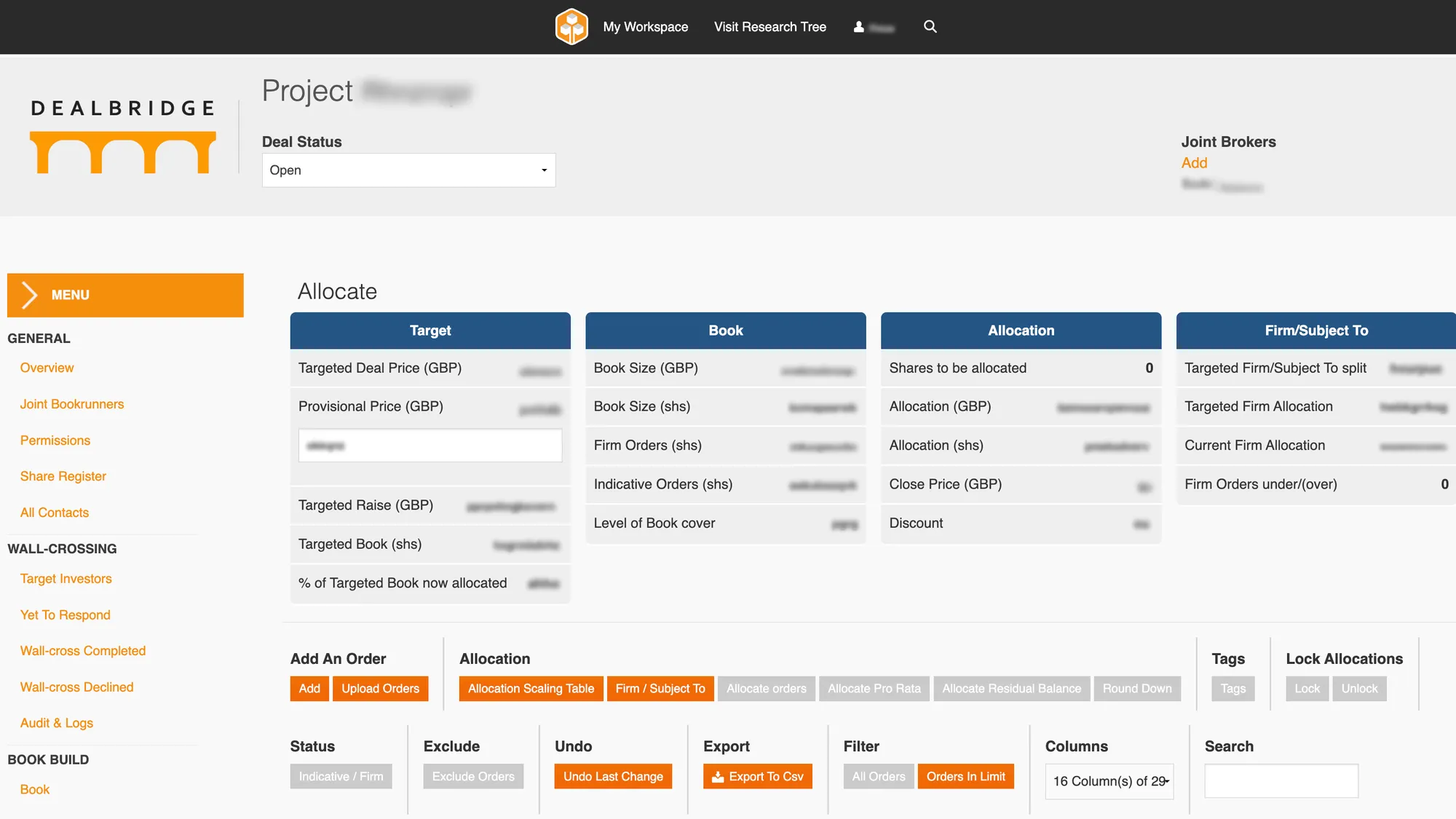
Create investor cohorts through order tagging, allocate in bulk across each cohort, use a range of pro rata allocation algorithms, apply firm and subject-to-approval allocations, and more.
What a desk gets back
- Less admin on a typical transaction
- 20hrs
- Reduction in manual inputting and error
- 90%
- Saved a year for a typical broker
- 30days
Manage the whole share allocation process
Centralised allocation management
DealBridge offers a centralised platform to manage the entire share allocation process, keeping all your data organised.
Investor tagging
Easily tag orders to different investor tiers, so you can prioritise the investors you want in the book and tailor allocations accordingly.
Allocation scaling table
Visualise the allocation process with an allocation scaling table, giving a clear overview of the best deal prices for execution and helping teams make informed decisions.
Why use DealBridge for share allocation?
Improved decision-making
With features like the allocation scaling table, teams can quickly identify the best deal prices and make informed, strategic allocation decisions.
Enhanced efficiency
DealBridge simplifies the share allocation process, reducing manual errors and saving time through automation and real-time updates.
Centralised data management
A single platform for all allocation data, making information easy to access and manage, which improves collaboration and accountability.
Share allocation FAQs
What is share allocation?
Share allocation is the process of distributing shares among investors during a capital raising event, such as an initial public offering (IPO) or a follow-on offering. It decides how many shares each investor receives, based on demand, commitments and specific allocation criteria.
How does share allocation work?
Brokers, investment banks and deal teams gather orders from investors and assess their interest. On that basis they distribute shares strategically, often prioritising certain investors or tiered commitments to secure the right participation and a successful raise.
How does a team manage share allocation?
By using a centralised platform like DealBridge to track orders, investor preferences and commitments. That supports efficient decision-making and clear communication within the team, and keeps the allocation process organised.
What are the key considerations for share allocation?
Understanding investor demand, prioritising key relationships and adhering to regulatory guidelines. Clear communication and transparency throughout the process are also essential to treat all investors fairly.
Why is efficient share allocation important?
It is crucial for maximising the capital raised and supporting strong market performance. By distributing shares accurately according to demand and investor preferences, companies can build strong relationships and improve investor satisfaction.
How does DealBridge support share allocation?
DealBridge offers real-time visibility of investor demand, an allocation scaling table for optimal pricing and tools for tagging tiered investors, so teams can manage the allocation process efficiently and effectively.
DealBridge
Try it on three transactions, free
No obligation. Book a demo and we will set your desk up in a test environment.